 (218) 849-9794


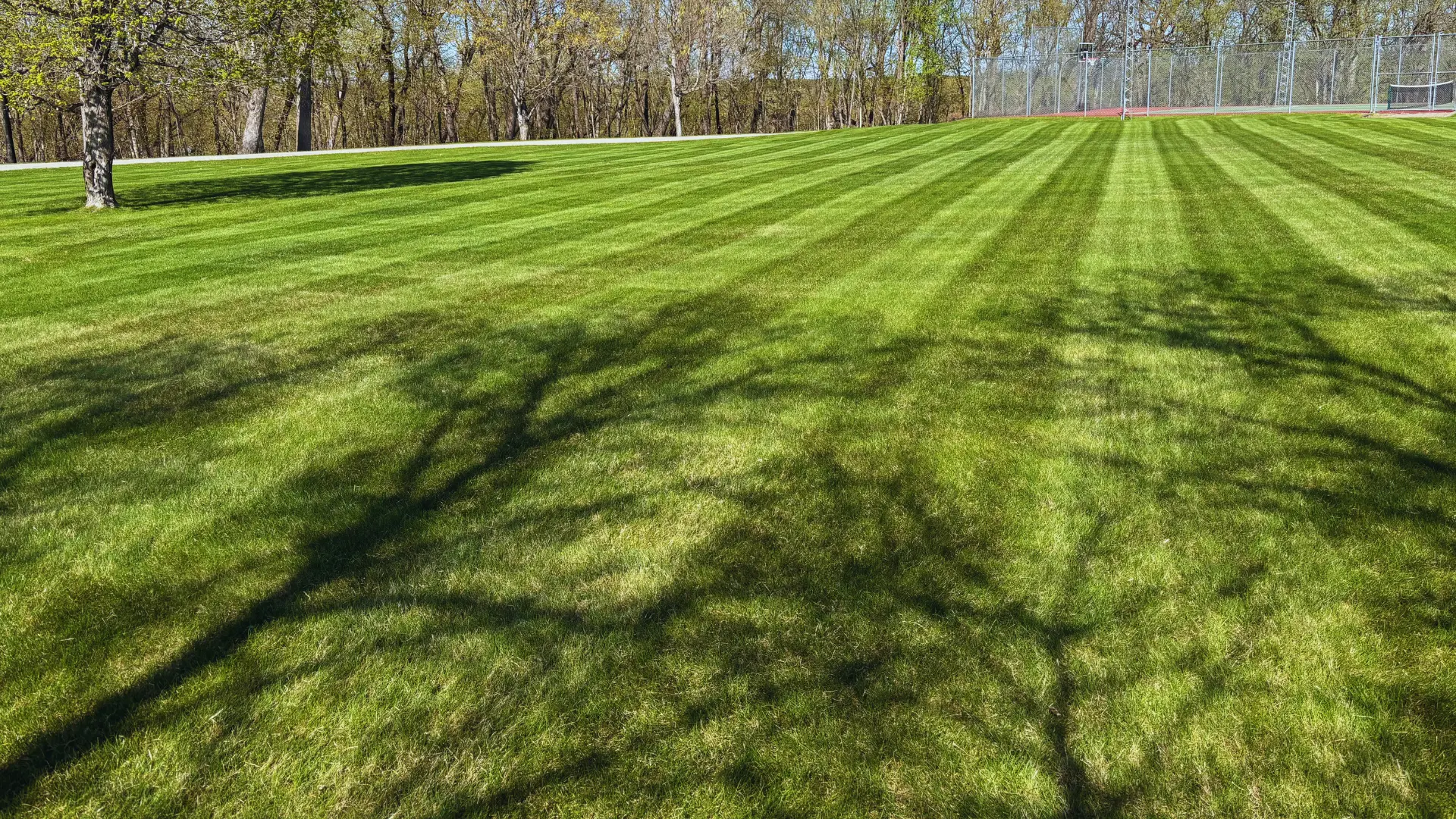

Watering a lawn sounds simple. Turn the sprinklers on, let them run, done. But incorrect watering is one of the most common reasons lawns in the Detroit Lakes area struggle through summer — and most homeowners have no idea their watering habits are part of the problem.
Here is what actually works for a Becker County lawn.
How Much Water Does a Minnesota Lawn Need?
According to the University of Minnesota Extension, lawns need between one-quarter inch and one inch of water per week under normal conditions — accounting for any rainfall. But that number changes significantly based on soil type and weather.
Sandy soil — common throughout lakeshore properties in Becker County — drains fast and holds less moisture. Under normal summer conditions, two to three watering sessions per week is a reasonable starting point. But during hot, dry stretches like we see every July and August in Detroit Lakes, that may need to increase to four or five times per week to keep up with what the heat is pulling out of the soil. Heavier clay soils hold moisture longer and typically need less frequent watering.
University of Minnesota Extension — Water Wisely: Start in Your Own Backyard
The bottom line: adjust your schedule based on actual conditions. What works in a mild June week will not be enough during a ninety-degree August stretch.
Water Deep...
Snow Mold in Detroit Lakes: What It Is, What Causes It, and How to Help Your Lawn Recover This Spring
As the snow melts across Becker County, many homeowners are stepping outside to find circular, straw-colored patches of matted, crusty grass spread across their lawn. Some patches are a few inches across. Others span several feet.
What you are looking at is almost certainly snow mold. The good news is that in most cases your lawn will recover. What you do in the next few weeks — and what you did last fall with fertilizer — will determine how fast.
What Is Snow Mold?
Snow mold is a general term for cold-weather fungi that thrive when snow sits on top of unfrozen ground for an extended period. In Becker County, our early-season snowfalls frequently arrive before the ground has fully frozen, creating an insulated, humid environment right against your turf — exactly what these fungi need to establish and spread.
There are two types, and it is worth knowing which one you have because they behave very differently.
Gray Snow Mold (Typhula Blight) is the more common type in northwest Minnesota. It appears as bleached, grayish-tan circular patches with grass that looks matted and water-soaked. The encouraging news is that Gray Snow Mold typically damages only the grass blades, not the crown of the plant. If the crown is alive, the grass will recover on its own.
Pink Snow Mold (Microdochium Patch) is less common but more serious. It carries a ...
Just complete the form below to get a pricing quote.
