 (218) 849-9794



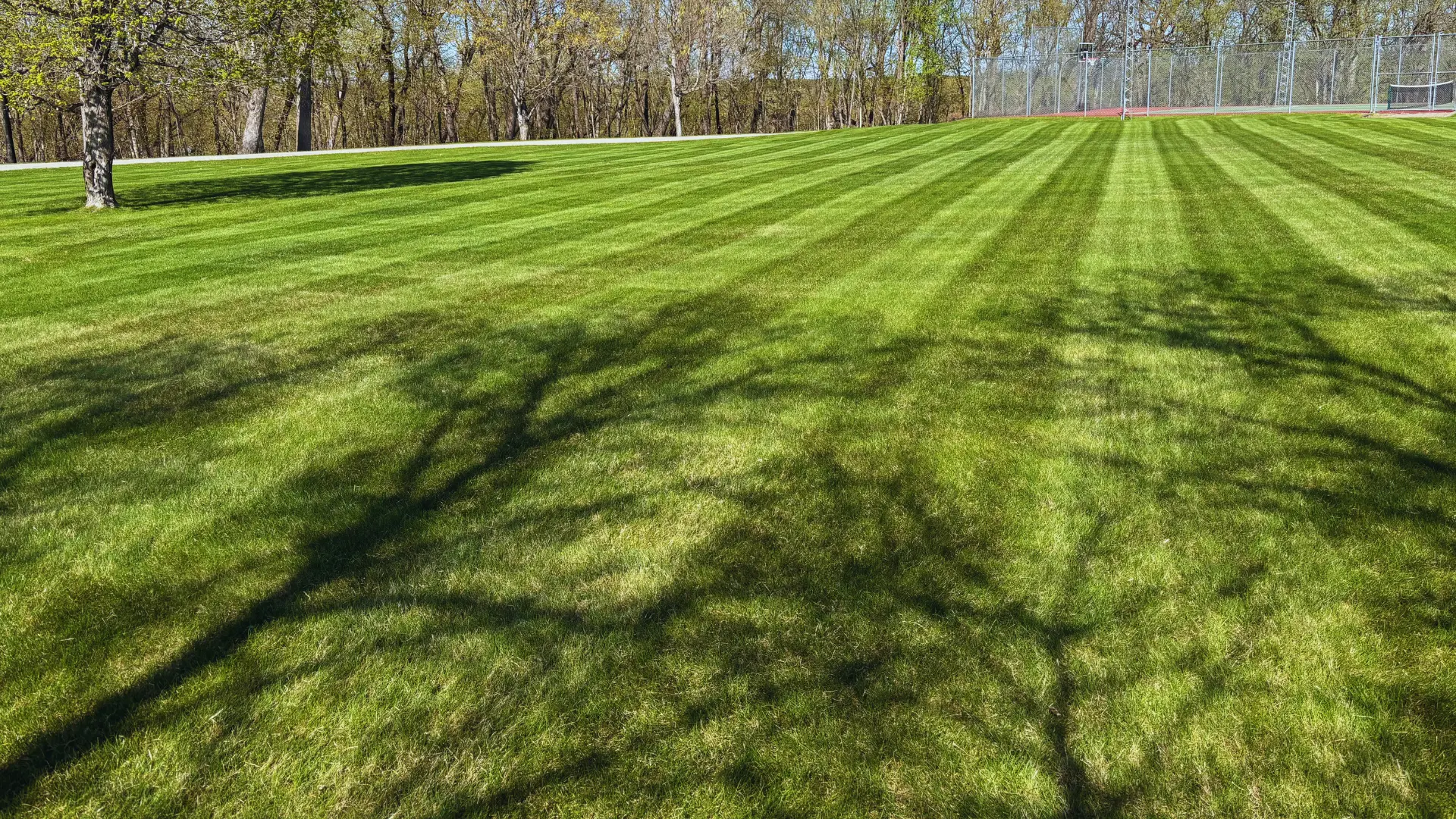
Watering a lawn sounds simple. Turn the sprinklers on, let them run, done. But incorrect watering is one of the most common reasons lawns in the Detroit Lakes area struggle through summer — and most homeowners have no idea their watering habits are part of the problem.
Here is what actually works for a Becker County lawn.
How Much Water Does a Minnesota Lawn Need?
According to the University of Minnesota Extension, lawns need between one-quarter inch and one inch of water per week under normal conditions — accounting for any rainfall. But that number changes significantly based on soil type and weather.
Sandy soil — common throughout lakeshore properties in Becker County — drains fast and holds less moisture. Under normal summer conditions, two to three watering sessions per week is a reasonable starting point. But during hot, dry stretches like we see every July and August in Detroit Lakes, that may need to increase to four or five times per week to keep up with what the heat is pulling out of the soil. Heavier clay soils hold moisture longer and typically need less frequent watering.
University of Minnesota Extension — Water Wisely: Start in Your Own Backyard
The bottom line: adjust your schedule based on actual conditions. What works in a mild June week will not be enough during a ninety-degree August stretch.
Water Deep — Not Often
The most important principle most homeowners get backwards is this: water deeply rather than shallowly, even when you increase frequency during hot weather.
UMN Extension recommends watering with enough volume to wet the soil to a depth of six inches per session. Grass roots follow moisture downward. Shallow watering keeps roots near the surface where soil dries out fastest. Deep watering trains roots to grow down where temperatures are cooler and moisture is more stable — producing a lawn that handles heat stress significantly better.
A simple check: after a watering cycle, push a screwdriver into the soil. It should slide in easily to six inches. If it stops at two or three, run your system longer each session.
University of Minnesota Extension — Water-Saving Strategies for Home Lawns
When You Water Matters
Water in the early morning — ideally between 4 and 8 AM. Cooler temperatures mean less evaporation. Grass blades dry out as the day warms, reducing fungal disease risk. Evening watering leaves turf wet through warm nights, which is one of the most common contributors to lawn fungus we see in Becker County.
Midday watering wastes water — a significant portion evaporates before it reaches the root zone.
Adjust for the Weather — Do Not Set and Forget
Minnesota summers swing between heavy rainfall weeks and extended dry stretches. Running your irrigation on a fixed schedule regardless of conditions means you are overwatering during rainy periods and underwatering when the heat hits. UMN Extension specifically recommends adjusting irrigation based on actual weather rather than a programmed timer.
If your system is not making those adjustments automatically, you are doing the work manually — or not at all.
Signs Your Lawn Is Telling You Something
Too dry: Grass blades fold or curl lengthwise. Footprints stay visible rather than springing back. Color shifts to a dull blue-gray.
Too wet: Lawn feels spongy. Fungal patches appear. Weeds — especially crabgrass and sedges — increase. Runoff visible during watering cycles.
Both are fixable. But knowing which problem you are looking at is the first step.
How a Properly Managed Irrigation System Helps
Consistent, correctly timed, properly measured watering is nearly impossible without an in-ground system zoned for your specific property. At Miller Yard Care, our irrigation services cover spring startup, winterization, mid-season audits, and repairs. If your system has not been calibrated to match your soil type and sun exposure zones, it is likely over or underwatering sections of your lawn right now.
Learn more about our Irrigation Installation and Maintenance services.
(218) 849-9794
Frequently Asked Questions
Q: My sprinklers run every day — is that too much?
A: For most established lawns under normal conditions, yes. Daily light watering keeps roots shallow and increases fungal risk. Longer, less frequent cycles encourage deeper rooting. During extreme heat and drought however, more frequent shorter cycles may be needed to keep up with what the heat is demanding.
Q: What time should I run my irrigation system?
A: Early morning between 4 and 8 AM. This minimizes evaporation and allows grass to dry before nightfall — significantly reducing fungal disease risk.
Q: Does soil type change how I water?
A: Yes, significantly. Sandy lakeshore soils need more frequent watering with less volume per session. Heavier soils hold moisture longer. If your system is not zoned for different soil conditions on your property it is probably not performing at its best.
Q: How do I know if I am watering deeply enough?
A: Push a screwdriver into the soil after a cycle. If it slides in easily to six inches you are in good shape. If not, increase your run time per zone.

Comments (0)
Thanks for your comment!
Thanks for your feedback! Your comments have been successfully submitted! Please note, all comments require admin approval prior to display.
Error submitting comment!
There is a problem with your comment, please see below and try again.