 (218) 849-9794



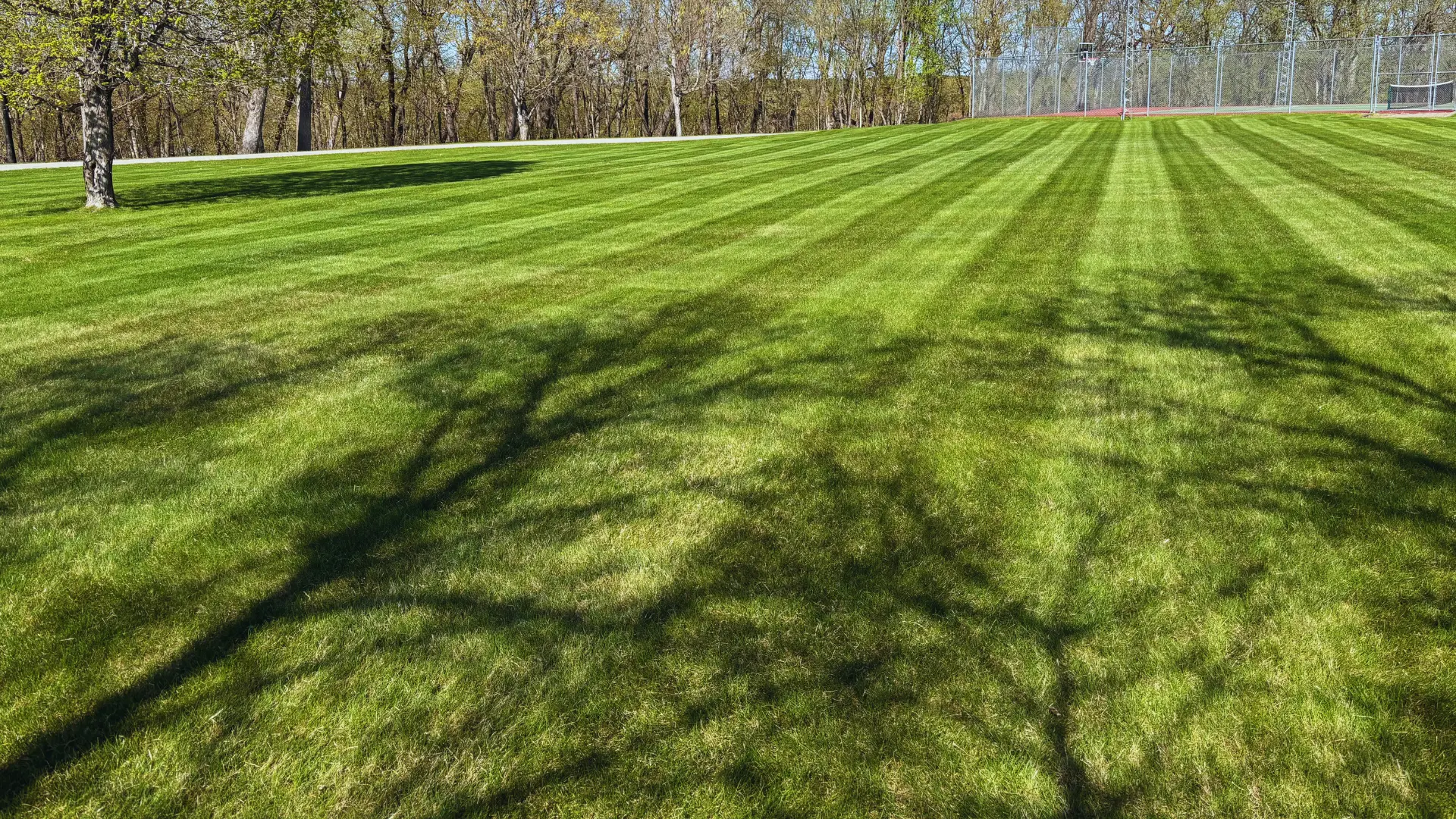
If you have been thinking about aerating or overseeding your lawn, stop waiting. Right now — mid-August through mid-September — is the single best window of the entire year to do it in Becker County. The timing is not a coincidence. Several factors are lining up right now that make this stretch significantly more effective than any other time on the calendar.
Here is what is happening, why it matters, and why this window closes faster than most homeowners expect.
What the University of Minnesota Says About Timing
This is not opinion — the research is clear and specific to our region.
According to the University of Minnesota Extension, the best time to aerate a Minnesota lawn is between late August and early October. For overseeding, the optimal window is even tighter: August 20 through September 10 is the ideal target, with late September as the outer limit. Beyond that, new seedlings do not have enough time to develop the root system they need to survive a Becker County winter.
UMN Extension — Fall Lawn Care Starts Now
UMN Extension — How to Control Thatch in Your Lawn
That window starts right now. Waiting until October is waiting too long.
The Herbicide Timing Advantage Most Homeowners Do Not Know About
This is one of the most important reasons fall aeration and overseeding works better than spring — and most people have never heard it explained.
In spring, pre-emergent herbicides are applied to lawns across Becker County to prevent crabgrass from germinating. Those products work by creating a chemical barrier in the soil that stops seed germination. The problem is they cannot tell the difference between a crabgrass seed and a desirable grass seed. Any overseeding done in spring while that pre-emergent is still active in the soil is working against itself.
By mid to late August, those spring pre-emergent applications have broken down enough that they no longer interfere with new grass seed germination. The chemical barrier is gone. Seed goes into the ground, makes contact with the soil, and germinates without competition from the residual herbicide that would have blocked it months earlier.
This is a genuine and meaningful advantage that makes fall overseeding consistently more successful than spring overseeding on lawns that receive a standard herbicide program.
The Weather Is Working in Your Favor Right Now
Cool-season grasses — Kentucky bluegrass, fine fescue, and perennial ryegrass — are the turf species that make up Becker County lawns. They grow best when air temperatures are between 55 and 75 degrees Fahrenheit. The warm days and cool nights of late August and early September hit that range almost perfectly.
Warm soil temperatures from summer accelerate germination — seed sprouts faster in warm soil than in the cold ground of spring. Cool nights allow the young seedlings to harden and develop without the heat stress that would slow them down in July. And the natural increase in rainfall that often comes with late summer in northwest Minnesota helps keep new seed moist during the critical germination period.
The result is faster germination, stronger early root development, and seedlings that go into their first winter with a better chance of survival than anything started in spring.
Core aeration is the process of mechanically removing small plugs of soil across the entire lawn. A lawn aerator pulls these cores out and deposits them on the surface, where they break down and filter back in over the following weeks.
What is left behind are thousands of small channels going directly into the soil profile. Those channels do several things at once. They relieve compaction — critical after a full summer of mowing traffic and foot traffic on Becker County lawns. They improve the movement of air, water, and nutrients down into the root zone. They reduce the thatch layer by introducing soil microbes to the organic material. And most importantly for overseeding — they create the ideal seedbed.
When seed is spread immediately after aeration, a significant portion falls directly into those channels and makes contact with soil at depth. That seed-to-soil contact is what drives germination. Seed sitting on top of a dense thatch layer has poor contact and poor results. Seed dropping into fresh aeration holes has direct contact and germinates at a significantly higher rate.
What Overseeding Does for a Becker County Lawn
Over time, every lawn thins. Summer heat stress, drought, disease, insect pressure, and normal wear all reduce turf density season after season. A thin lawn is more vulnerable to everything — weeds establish more easily in open space, heat stress browns it out faster, and it simply looks less healthy.
Overseeding introduces new, fresh grass plants into the existing turf. Done in fall on a properly aerated lawn, new seedlings establish before the growing season ends, develop a root system over winter, and emerge in spring as part of a noticeably thicker stand of turf. Lawns that receive regular fall aeration and overseeding over several years are measurably denser, more weed-resistant, and more resilient under summer stress than lawns that skip it.
Fall also has a significant advantage over spring for another reason — far less weed competition. Cool-season weed seeds are largely dormant in late summer. New grass seedlings can establish without fighting annual grassy weeds for space and resources the way they would in a spring seeding.
How Much Time Do You Have?
The honest answer is three to four weeks from right now before the window starts closing. UMN Extension is specific — overseeding after late September in northern Minnesota gives seedlings very little time to develop before freeze-up. A plant that goes into winter without an established root system is a plant that may not come back in spring.
If this is on your list for this fall, it needs to happen in the next few weeks — not in October.
At Miller Yard Care, our aeration and overseeding service is one of the most impactful things we do for lawn health all season. If you want to get on the schedule before the window closes, now is the time to reach out.
Learn more about our Aeration, Overseeding, and Fertilization Services here.
(218) 849-9794
Frequently Asked Questions
Q: Can I aerate and overseed in September and still have it work in Becker County?
A: Early to mid-September — yes. Late September is pushing the outer edge of the window. UMN Extension recommends the target window as August 20 through September 10 for overseeding, with late September as the latest you can realistically expect good results before freeze-up in northern Minnesota.
Q: Why not just do it in spring?
A: Spring overseeding competes with residual pre-emergent herbicide, warm-season weed germination, and cooler soil temperatures. Fall overseeding avoids all three of those challenges. Research consistently shows fall overseeding produces better germination rates and stronger establishment than spring seeding for cool-season grasses.
Q: How long before I see results?
A: Most cool-season grass seed germinates within 7 to 21 days under good conditions. Kentucky bluegrass is slower — up to 3 weeks. You will see visible thickening by late September and significant improvement by the following spring as those plants come out of winter with an established root system.
Q: Do I need to water after aeration and overseeding?
A: Yes — this is critical. New seed needs consistent moisture to germinate. Keep the seeded area moist — light watering once or twice daily if no rain — until germination is visible. Then gradually reduce frequency and increase depth as the seedlings develop.
Q: Can I apply weed control after overseeding?
A: No. Any herbicide application — pre-emergent or post-emergent broadleaf — should wait until the new grass has been mowed at least three times. Applying too early will damage or kill the new seedlings.
Q: What if my lawn already looks okay — do I still need to overseed?
A: A lawn that looks acceptable today is often thinner than it should be. Overseeding every two to three years maintains density that acts as your best natural defense against weeds and summer stress. A thick lawn crowds out weeds naturally and recovers from heat and drought significantly faster than a thin one.

Comments (0)
Sorry! The comments have been closed.